Industrial Cleaners
The clean step before sanitizer does its job.
Heavy-duty cleaners for the clean step of clean/rinse/sanitize. Degreasers, alkaline cleaners, and acid cleaners formulated to handle the soil your sanitizer can't.
- Clean step of C/R/S protocol
- Alkaline + acid + degreaser lineup
- Pairs with Alpet D2 + PAA programs
Already running D2 sanitizer? Cleaners handle the clean step before sanitize.

Shop Industrial Cleaners
3 products shipped from our Bogart, GA warehouse

ZeroPoint | Industrial Biosecurity Protocol
ZeroPoint is an EPA-registered industrial biosecurity protocol built for the audit-sensitive reality of food p…

Alpet E4 Industrial Hand Cleaner
Alpet E4 is a gentle and durable skin cleanser for your visitors' and workers' hands. Packaged in a case of si…

BSI-275 Concentrated Liquid Warewashing Detergent
BSI-275 Concentrated Liquid Warewashing Detergent is a highly concentrated fragrance-free liquid detergent des…
EPA-registered sanitizers are validated on pre-cleaned surfaces. Without the clean step, sanitizer efficacy drops and documentation gets questioned.
Protein soils (meat, dairy), fat soils (kitchens), mineral soils (scale, beverage) all need different chemistry. We help you match product to soil.
D2 cleaners are selected to rinse cleanly away from Alpet D2 and PAA products — no chemistry conflicts in your clean/rinse/sanitize sequence.
Concentrates and bulk formats for facilities running dilution systems. Ask about pallet quantities and volume pricing.
Clean/rinse/sanitize only works when every step works.
Your sanitizer depends on a clean surface. Your audit depends on a rinse that actually removes the cleaner.
The clean step fails
A sanitizer applied to a surface that wasn't properly cleaned doesn't hit its validated kill rate. The whole sequence collapses.
The cleaner step has to match the soil — and has to rinse cleanly before sanitizer goes down.
Worker safety
Industrial cleaners are generally more aggressive than sanitizers. SDS review, PPE, and proper training are non-negotiable.
D2 provides SDS and handling guidance with every cleaner product, built to support your safety program.
Rinse water + compliance
Cleaner residues + rinse water both need to be accounted for in your environmental and wastewater plans.
Choosing cleaners that break down appropriately simplifies discharge permits and audit conversations.
Where D2 cleaners fit
CIP, kitchens, facility floors, and anywhere soil has to leave before sanitation starts.
Food processing CIP
Alkaline cleans + acid cleans on a rotating CIP schedule.
Commercial kitchens
Floor degreasers, hood cleaners, equipment deep-cleans.
Manufacturing
Equipment housings, shop floors, tool stations, shift-end resets.
Beverage + dairy
Tank cleans, line degreasing, pasteurizer maintenance.
Facility deep cleans
Quarterly resets, seasonal overhauls, new-location turnovers.
Cleaners + the sanitation sequence they enable

Surface Sanitizers
Alpet D2 no-rinse sanitizer for the step after your cleaner has done its job.
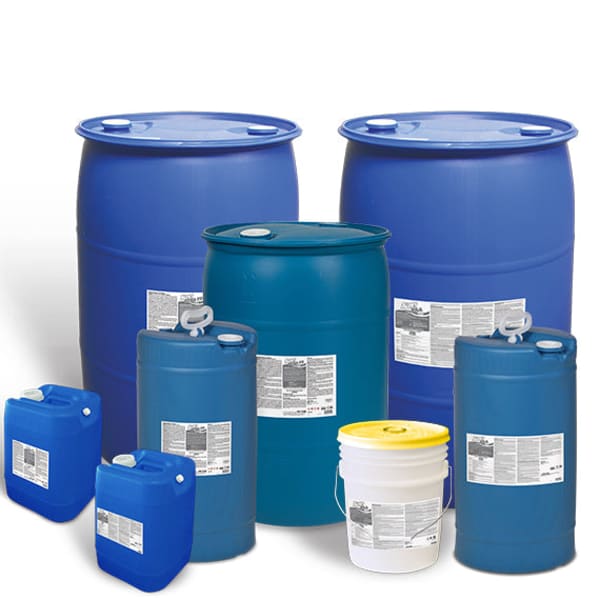
Peracetic Acid
Broad-spectrum PAA for heavy microbial load in CIP and wash lines.

Floor Sanitizers
Environmental sanitation to finish what your cleaner starts on the floor.
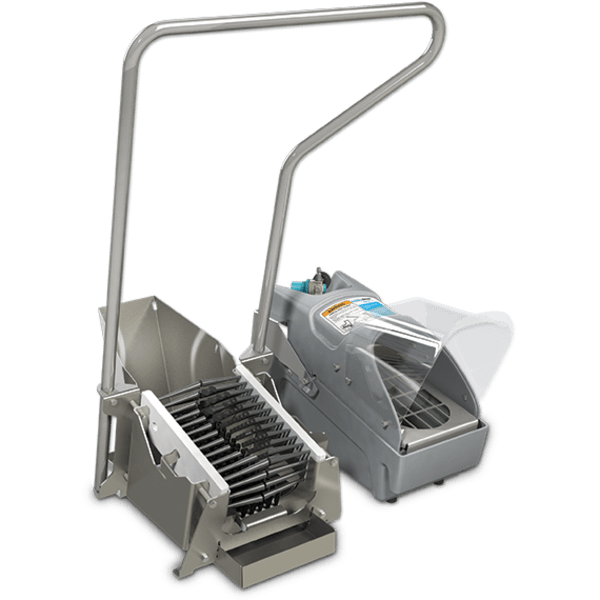
Dispensing Systems
Metered dilution equipment for consistent cleaner concentration at use.
Need help matching cleaner to soil?
Tell us what you're cleaning, how often, and what sanitizer comes next. We'll build a sequence that holds up.
Industrial Cleaners FAQs
Questions from food-safety, compliance, and operations teams.
How does ZeroPoint fit into a HACCP or SQF sanitation program?
ZeroPoint is an EPA-registered sanitizing solution, so it slots into the sanitation step of a HACCP plan or SQF program as a documented, registered product. Keep the EPA label and SDS on file for audits, and record contact times and dilution rates as part of your sanitation SOPs. Its one-step protocol simplifies the documentation burden compared to multi-product workflows.
Is ZeroPoint safe for food-contact surfaces?
Yes. ZeroPoint is formulated for use on food-contact surfaces in commercial food processing operations. Always follow the directions and contact times on the EPA-registered label for your specific application. It is surface-compatible with concrete, stainless steel, plastic, and processing equipment.
What is ZeroPoint used for in a food processing facility?
ZeroPoint is an EPA-registered industrial biosecurity protocol built for food production and food processing environments. Facilities use it to reset contamination risk between production cycles across food-contact zones, equipment, drains, and processing surfaces. It is designed for the audit-sensitive reality of meat, poultry, dairy, and produce operations where sanitation has to hold up to inspection.
What sizes does ZeroPoint come in for facility-scale use?
ZeroPoint is available in 1-gallon and 2.5-gallon containers, plus case quantities (4 x 1 gallon and 2 x 2.5 gallon) for facility-scale and multi-site operations. ZeroPoint dilutes economically, so case quantities are the typical choice for ongoing food-processing sanitation programs.